Senior Dog Slipping on Hardwood? Start Here.
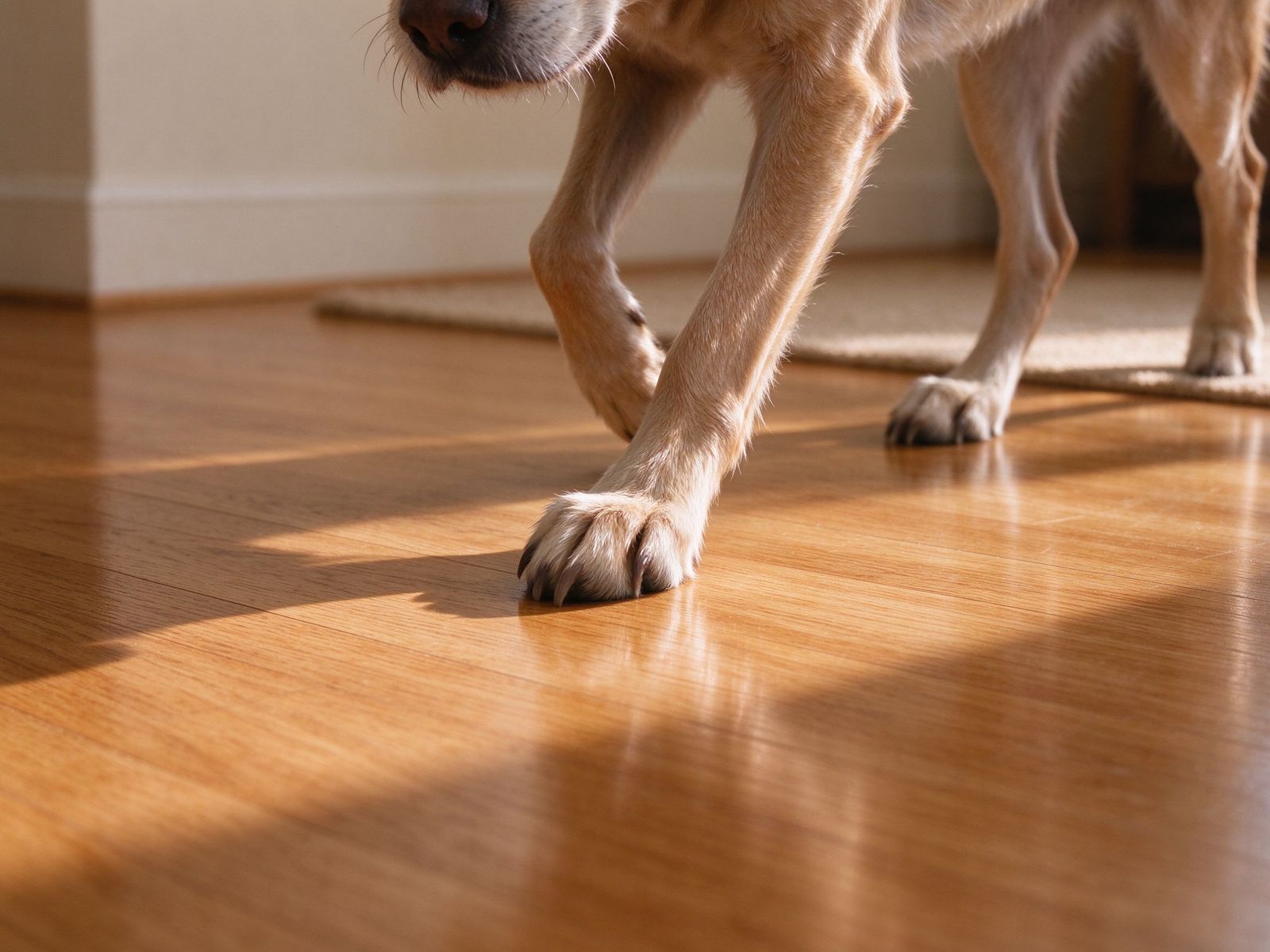
You probably noticed it in small moments first: a pause before crossing the kitchen, a front paw that skids on the hallway, the hind end splaying when your dog tries to turn. On smooth hardwood or tile, an older dog who is still fully willing to move can start to feel unsure of the very floor they have walked on for years.
The good news: slipping at home is usually one of the most solvable senior-dog problems. You rarely need an expensive device first. Most of the time the answer starts with the floor, the route, and a few things you can check today. This guide walks through 15 fixes in the order we’d try them — from what costs nothing, to what might be worth buying, to when a vet visit matters more than any product.
Why senior dogs struggle on smooth floors
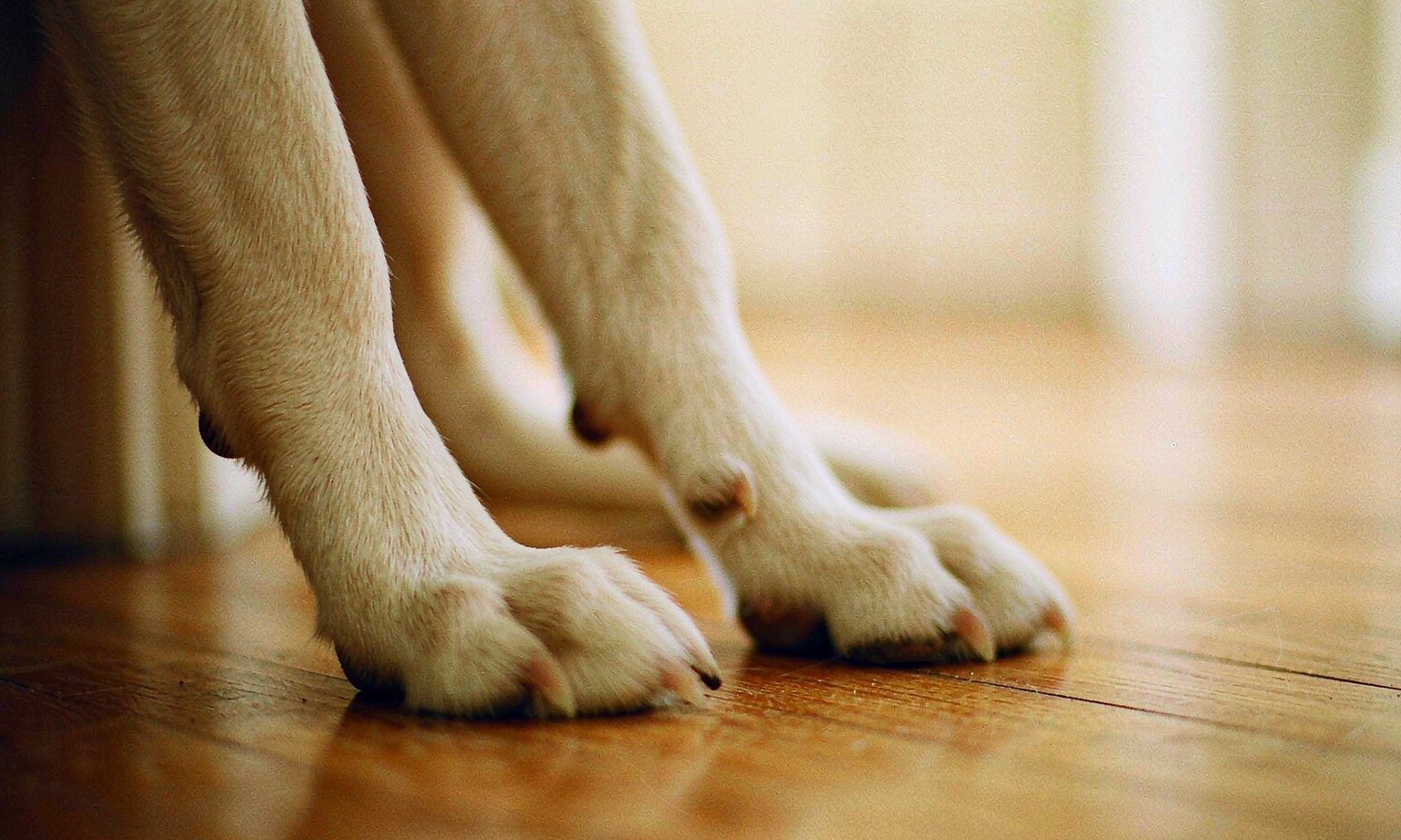
Younger dogs grip hardwood with claws and small adjustments most of us never notice. As dogs age, a few things stack up: muscles lose strength, especially in the rear; joints may feel stiffer, so steps are smaller and sharper; nails may grow longer if walks on abrasive pavement have dropped off; and the fur between the paw pads can grow thick and act like a tiny set of skates. None of this means your dog is weak or finished. It means the floor stopped helping them.
The goal isn’t to make the whole house fluffy. It’s to give confident footing on the routes your dog actually uses — bed to water, water to door — and on the transitions where they hesitate.
Vet boundary — read first. If the slipping is new and sudden, especially with weakness, dragging a hind foot, knuckling, wobbling, pain, or a recent fall, stop rearranging the rug and speak with your veterinarian. Sudden rear-end weakness can be a medical issue rather than a flooring problem. The rest of this guide is for gradual, age-related slipping on smooth surfaces.
First: check for sudden mobility changes
Before you spend a dollar, ask: is this gradual, or did it appear overnight? A dog who has slowly grown more careful on the floor over months is a different situation from a dog who woke up dragging a back leg. For the gradual case, work through the list below. For the sudden case, see the vet section.
Immediate & low-cost fixes (1–7)
1. Secure rugs — non-slip pad underneath
A rug that slides around is worse than no rug at all. Use a thin non-slip rug pad under mats at the places your dog stands most: food bowl, water bowl, the bed exit, and the doorway. The rug should not creep when a 70 lb dog turns on it.
2. Build a traction route, not a whole-room carpet
You don’t need to cover every square foot. Walk the route yourself: bed → water → door. Lay a runner or a few linked mats along exactly that path. See the diagram below — the idea is continuous grip on the path of travel, not random scattered rugs.
3. Trim nails
Long nails lift the pads off the floor and turn every step into standing on tiptoes — terrible on smooth surfaces. Keep nails short enough that they don’t touch the ground when the dog stands flat. If you’re uncomfortable trimming, a groomer or vet tech can do it quickly.
4. Check the fur between the paw pads
Long hair between the pads acts like a slick layer. Trimming the fur flush with the pads (use small, blunt scissors and take it slow) lets the pad actually meet the floor.
5. Dry the paws after outdoor trips
Damp paws on hardwood are even slicker. Keep a towel by the door and wipe paws after rainy walks — a small habit that removes a surprising number of slips.
6. Rearrange the water bowl to the soft route
If the water bowl sits in the middle of a long, smooth stretch, move it onto a mat or closer to the areas that already have grip. Your dog chooses the easy route by themselves.
7. Add lighting at night
Older dogs see less well in dim light. A soft nightlight on the bedroom-to-hallway path reduces tentative, insecure steps that turn into slips.
Product & environment fixes (8–14)
8. Improve the bed / couch landing zone
The moment paws leave the bed and hit smooth floor is a high-risk moment. Put a low, supportive step or a rug right at the exit, so the first landing is on grip rather than on hardwood.
9. Reduce slippery transitions
The worst spots are usually thresholds: rug-to-tile, room-to-hallway, the lip where one floor type meets another. Add a mat or transition strip so there’s no sudden change underfoot.
10. Use stair treads
If stairs are part of the problem, dedicated non-slip stair treads give each edge a grip point. For a fuller approach, read our guide on making stairs safer for an older dog.
11. Try paw traction (grips)
Grips fit across the paw and add grip directly on the contact point. They’re worth trying if the floor route is already as good as you can make it and your dog still slides on smooth surfaces. See the grips product page and how to measure paw width in the fit guide. Keep nails trimmed for them to work well.
12. Reconsider boots and socks
Many dogs hate socks, and slippery-backed socks can slide themselves off. Boots are often for outdoor protection, not indoor grip. Before buying something that goes on the paws, try the floor fixes first — the best traction product for an indoor senior dog may not go on the dog at all.
13. Use short-duration support
If your dog can still walk but needs a little help steadying up or on the way out the door, a rear-support sling can help for short moments — getting up, a potty trip, a careful crossing. It is not a device that takes over the walk. See the support sling and how to size it on the fit guide.
14. Observe when slipping happens
Keep a mental log: first thing after a long nap? After meals? On turns? On cold mornings? Stiffness after rest points to a different (still mostly home-manageable) pattern than constant, worsening weakness. Notes like this are also exactly what your vet will ask for.
Traction options compared
| Option | Best for | Low cost? | Watch out for |
|---|---|---|---|
| Secure rugs / runners | Indoor routes, bed-to-door paths | Yes | Slips if no non-slip pad underneath |
| Nail trim + paw-pad trim | Almost every senior dog | Yes | Needs repeating regularly |
| Stair treads | Stairs used daily | Low | Edges still need grip |
| Paw grips | Good floor, still sliding paws | Mid | Fit depends on paw width; nails must be short |
| Socks / boots | Occasional use | Mid | Many dogs resist; can slip off |
| Rear support sling | Steadying up / short trips | Mid | Not for dogs unable to bear weight |
Which first? Start with the floor. If your dog only slips indoors, fix rugs, the runner route, nails and paw hair before adding anything to their paws.
Know when to call your vet
Home fixes help with gradual age-related slipping. They do not replace veterinary care. Contact your vet promptly if you notice:
- Sudden rear-leg weakness or collapse
- Dragging a hind paw or knuckling under
- Pain, crying, or guarding when moving
- A fall or injury that won’t put weight on a leg
- Sudden change alongside accidents, confusion or appetite loss
Quick-start checklist
- Put a non-slip-padded rug at the food/water and the bed exit.
- Lay one continuous runner along bed → water → door.
- Trim nails short enough not to touch the ground.
- Trim fur between the paw pads.
- Add a landing mat at the bed/couch exit.
- Add a nightlight on the overnight route.
- If still sliding on smooth floors, measure paw width and try grips.
- If getting-up is the hard part, look at a rear-support sling for short help.
Build your senior dog’s traction setup. Start with the floor, then consider grips for paw-level grip or a support sling for steadying. Still unsure? Send us your dog’s details — and if it sounds more like a medical change, read when to call the vet first.