When Your Dog Needs Support — and When to Call Your Vet
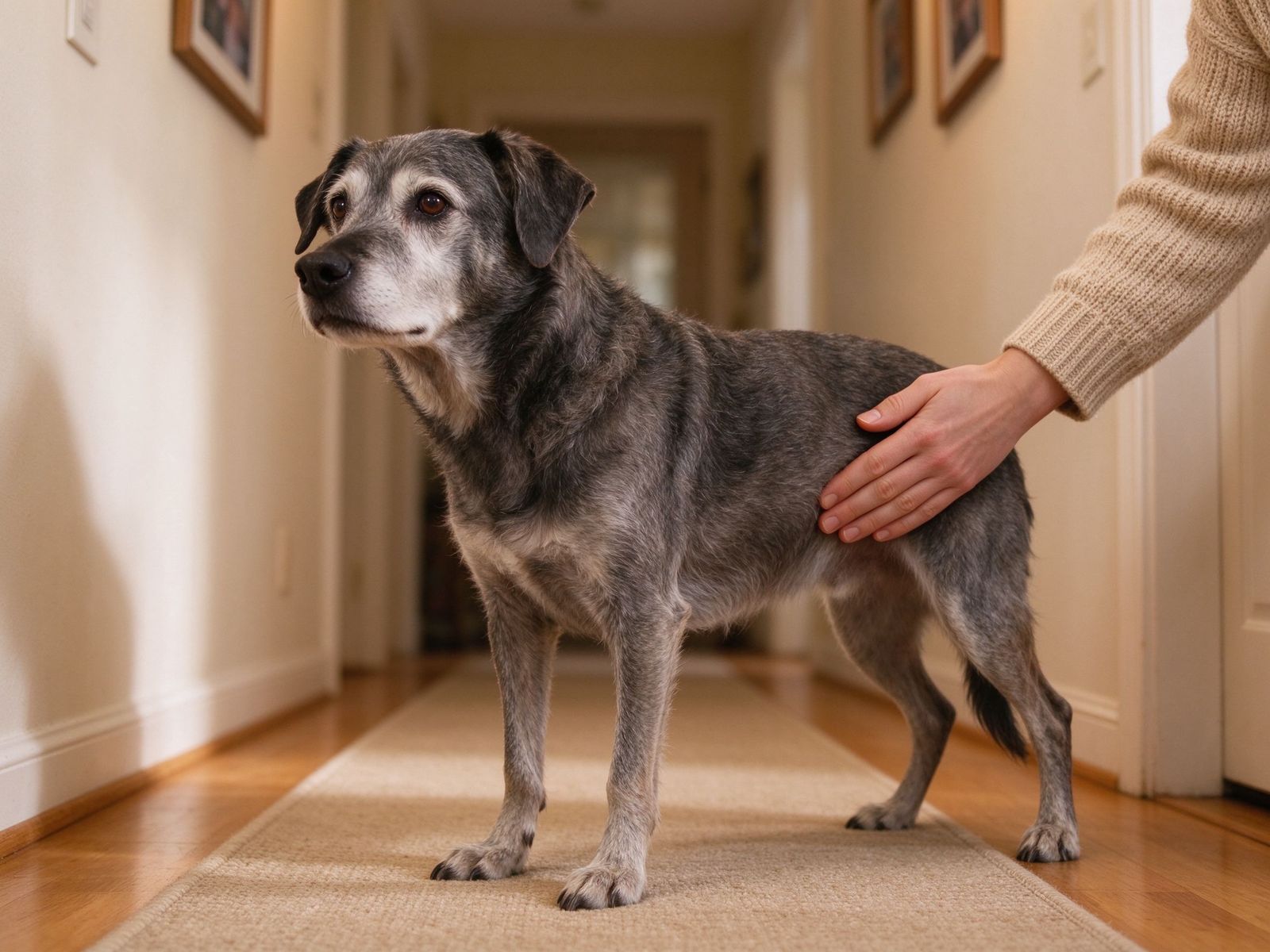
It’s the question behind almost every senior-dog product: is this a home problem I can fix, or is it time for the vet? Products like a rear-support sling, paw grips and a washable pad are genuinely useful — but they have clear limits. This guide draws that line honestly so you know what to try at home and what to bring to a veterinarian first.

What home support can do
Senior dogs slow down in predictable, often gentle ways. They may need more traction on smooth floors, a little help steadying up, or protection for the bed on accident nights. These are everyday living problems, and the right setup makes a real difference: a confident step across the kitchen, an easier trip outside, a cleaner morning. Home support is designed for exactly that — everyday, gradual, age-related changes, while your dog still moves under their own power.
What each product can and can’t do
Rear-support sling
It can: help support the rear end for short moments — getting up after a nap, a careful potty trip, steadying on stairs — when your dog can still bear weight on their own legs.
It can’t: take the place of legs for a dog who cannot stand, treat weak or painful hips, or replace veterinary assessment for sudden weakness. If your dog cannot comfortably bear weight on the supported legs, has an acute injury, or needs continuous assistance, a sling is not the answer — your vet is.
Paw grips
They can: add grip on smooth indoor floors for a dog who is otherwise walking fine but whose paws slide on hardwood or tile.
They can’t: fix leg weakness, pain, or a neurological gait problem. Grips are a traction aid, not a treatment. Fit depends on paw width and short nails — see the fit guide.
Washable protection pad
It can: reduce cleanup and protect the bed and floor during accidents, making overnight care manageable.
It can’t: treat urinary incontinence or its medical causes. A pad is home protection; the reason accidents are happening still deserves a vet conversation, especially if they’re new or worsening.
Vet boundary. None of these products treats, cures or prevents medical conditions. They support easier daily life. If a change is sudden, severe, painful, or involves a fall or neurological signs, contact your veterinarian before buying anything.
Red flags — call the vet first
Use this checklist. If anything on the left is happening, skip straight to the vet rather than adding more gear at home:
- Sudden rear-leg weakness, collapse, or inability to stand
- Dragging a hind paw, knuckling, or walking differently than usual
- Pain: crying, yelping, or guarding when touched or moving
- A fall, limping, or refusing to put weight on a leg
- Sudden accidents alongside increased thirst, blood in urine, or straining
- Sudden confusion, disorientation, or appetite/behavior changes
- Rapidly worsening mobility over days rather than weeks
The decision in one table
| What you’re seeing | Try at home first | When it’s a vet visit |
|---|---|---|
| Careful, gradual slipping on smooth floors | Rugs/runner, nail trim, traction setup; then grips | Sudden slipping with weakness or knuckling |
| Slower to get up, wobbly on stairs | Stair treads, easy route, rear sling for short help | Sudden refusal, pain, dragging a leg |
| Mild, occasional nighttime accidents | Waterproof layer + washable pad, easy potty path | Sudden increase, thirst, blood, straining |
| Stiff but improving as they warm up | Warm bed, traction, gentle short walks | Persistent pain or worsening stiffness |
What to do next
If nothing on the red-flag list applies and the change feels gradual, you can confidently start with the home setup: fix the floor and the route, size a sling by chest/girth, and layer a washable pad on the bed. For more detail on each problem, read the full guides on slipping on hardwood, safer stairs, and nighttime accidents.
If you’re ever unsure whether your dog’s change is “normal aging” or worth a vet call, the safe answer is to ask — bring your observations, when it started, and whether it’s getting worse. We’re happy to help you choose the right home support too; send us your dog’s details.
Start with the problem, not the product. Match what you’re seeing to grips, a support sling, or a washable pad — and use the fit guide before ordering. When in doubt, ask us or call your vet.