When an Older Dog Starts Having Accidents at Night
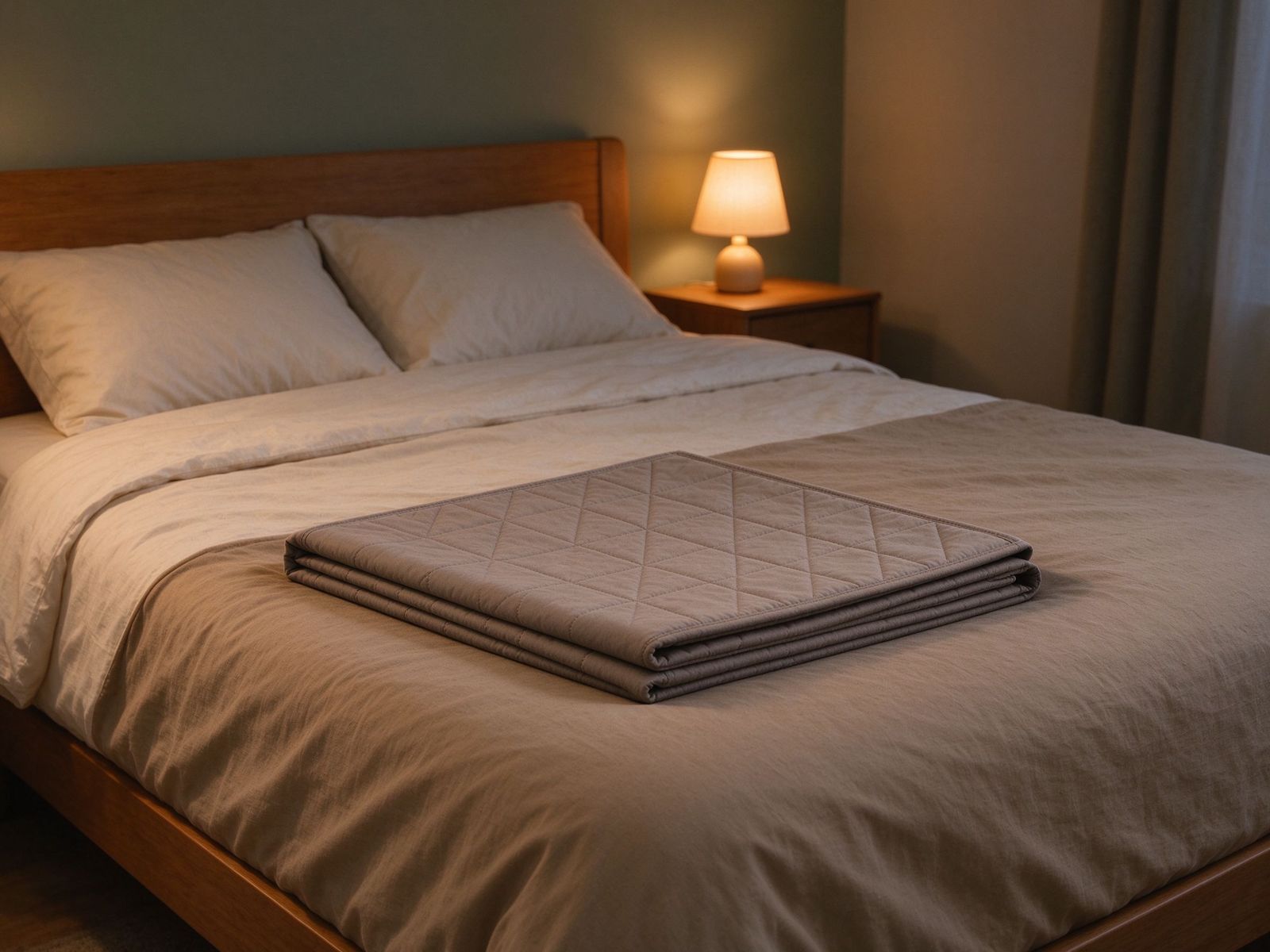
Waking up to an accident in the middle of the night is exhausting — and it’s easy to take it personally, or to worry your dog is “behaving badly.” Almost always, they aren’t. Older dogs simply can’t hold it the way they used to, or can’t get up and reach the door in time. The goal of home care isn’t to punish or scold; it’s to protect the bed, shorten the cleanup, and make it easier for everyone to sleep.
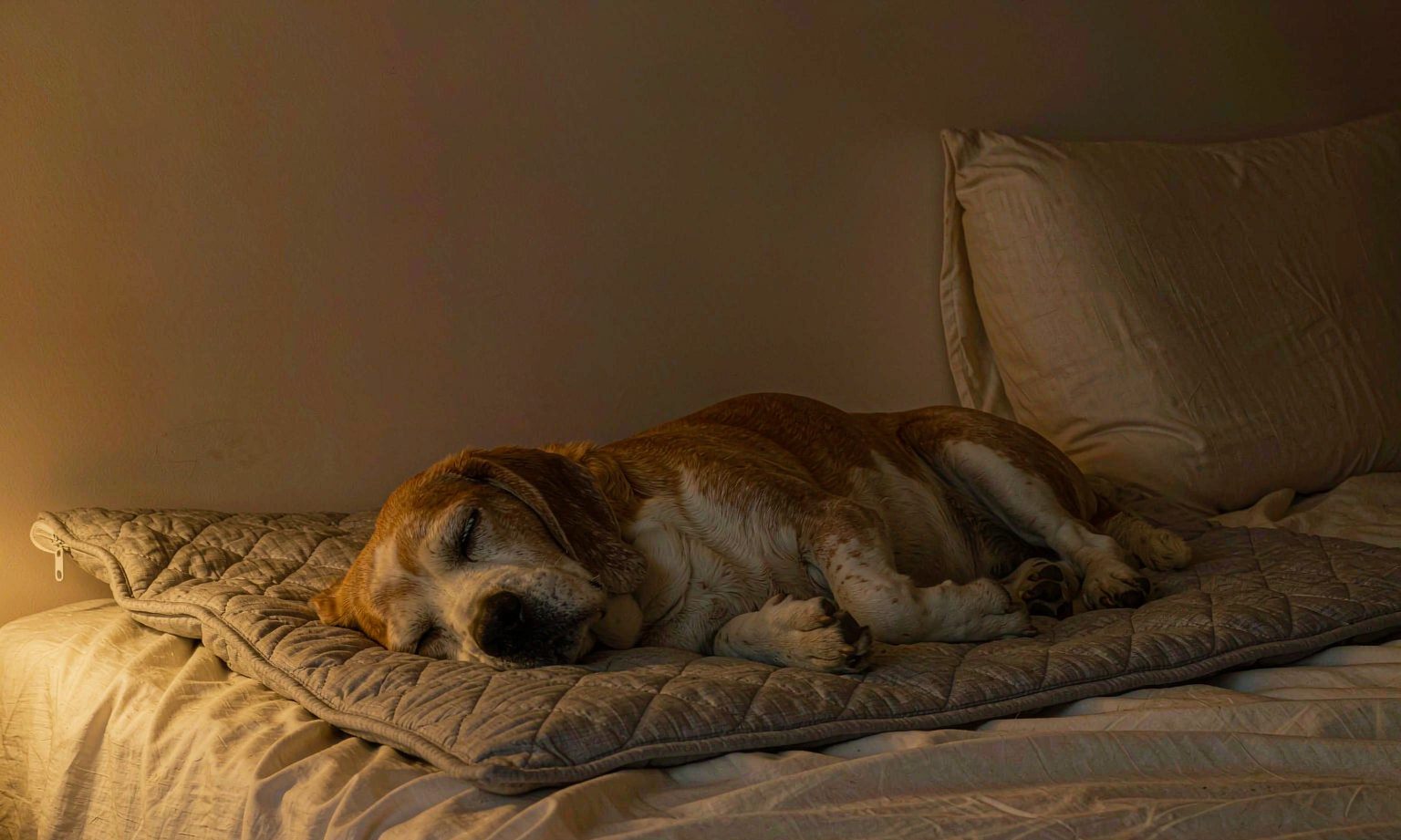
Why nighttime accidents become difficult
Several things change as dogs age. Bladder control can weaken; deep sleep can make them less aware they need to go; stiff joints mean getting up is slower, so they may not rouse in time; and vision or confusion can make the dark hallway feel unfamiliar. Accidents are rarely defiance. They’re a mismatch between what your dog can physically manage overnight and how the home is set up.
Start with the sleeping area
The simplest overnight change is to move the bed to a place that’s easy to protect. If your dog sleeps on your bed and accidents are frequent, a waterproof, washable layer on their own nearby bed — on an easy-to-clean floor — often makes nights calmer for both of you. You’re not banishing them; you’re choosing a surface that forgives a mistake.
Protect the mattress
If they do share your bed or a large dog bed, a waterproof mattress or bed cover underneath stops accidents from soaking through to the padding. Think in layers: a waterproof barrier closest to the mattress, then a washable pad on top that you can lift and change quickly.
Create a washable layer
A reusable, washable pad on top of the waterproof layer is the workhorse of overnight care. It catches the accident, protects the layers beneath, and goes straight in the wash — no soaking the whole mattress at 3 a.m. For a senior dog, a washable pad is usually more practical long-term than a pile of disposables. See the overnight protection pad for sizing and materials.
Keep the path to the door easy
Many accidents happen because the route out is hard: dark, slippery, or blocked. Make the overnight potty trip as easy as the daytime one — a nightlight, a non-slip runner from bed to door, and the door left accessible. If stairs are part of the problem, set up a single-level sleeping arrangement (see our stairs guide). A late, gentle potty trip right before bed also reduces the overnight load.
Reduce full-bath cleanup
Keep wipes, a small towel and a spare pad by the sleeping area so a 3 a.m. accident is a two-minute swap rather than a full bath. If your dog’s coat or skin gets repeatedly wet, gentle cleaning and drying matter — and that’s also a good reason to check in with your vet about skin irritation.
Disposable vs. washable protection
| Option | Best for | Pros | Watch out for |
|---|---|---|---|
| Washable pad | Frequent overnight accidents | Reusable, lower long-term cost, no stocking up | Needs washing between uses; have a spare |
| Disposable underpads | Travel, occasional accidents, backup | No laundry, convenient | Ongoing cost, can bunch, less eco-friendly |
| Waterproof mattress cover | Any bed your dog uses | Protects the padding underneath | Not a substitute for a washable top layer |
| Dog diaper / belly wrap | Managed with guidance | Contains mess | Must be changed frequently; skin care needed |
What size pad makes sense for a large dog?
Measure the sleeping area you want to protect and choose a pad that covers where your dog actually lies — not just their body, but where they may stretch. A pad that’s too small just shifts the leak to the corner. For large breeds, an oversized pad on an easy-to-clean floor is usually more restful than a small one on the bed. Check the dimensions on the product page against the bed or crate before you order, and ask us if you’re unsure what fits.
What to do when accidents suddenly increase
Track it for a few nights: is it every night, only after evening water, or sudden and dramatic? A gradual, mild increase often fits the home-management plan above. A sudden onset — especially with drinking more, changes in urination, discomfort, or accidents in rooms they were previously fine in — deserves a conversation with your vet rather than just more pads.
When to speak with your veterinarian
Washable pads protect the home — they do not treat medical causes. Contact your vet if you notice:
- Increased thirst or urination, or accidents that are large and frequent
- Straining, blood in the urine, or signs of pain
- Accompanied by confusion, appetite loss, or mobility changes
- Skin redness, irritation or rashes from wetness
A sudden new pattern of accidents
Medical causes (such as urinary tract issues or other conditions) are diagnosed and treated by your veterinarian — home care supports your dog comfortably while you sort that out.
Overnight setup checklist
- Move sleeping to an easy-to-protect, single-level spot.
- Add a waterproof barrier under the bedding.
- Place a washable, quick-swap pad on top; keep a spare ready.
- Keep wipes, a towel and the spare pad by the bed.
- Light and de-slip the path from bed to door.
- Add a gentle potty trip right before bed.
- Watch for sudden changes that warrant a vet visit.
Build your overnight care setup. A washable protection pad on a waterproof layer makes nights manageable. Need help choosing the right size? Send us the sleeping-area dimensions. Also see safer floors and when to call your vet.